
Sal de Manantial
Conoce el origen de la sal 

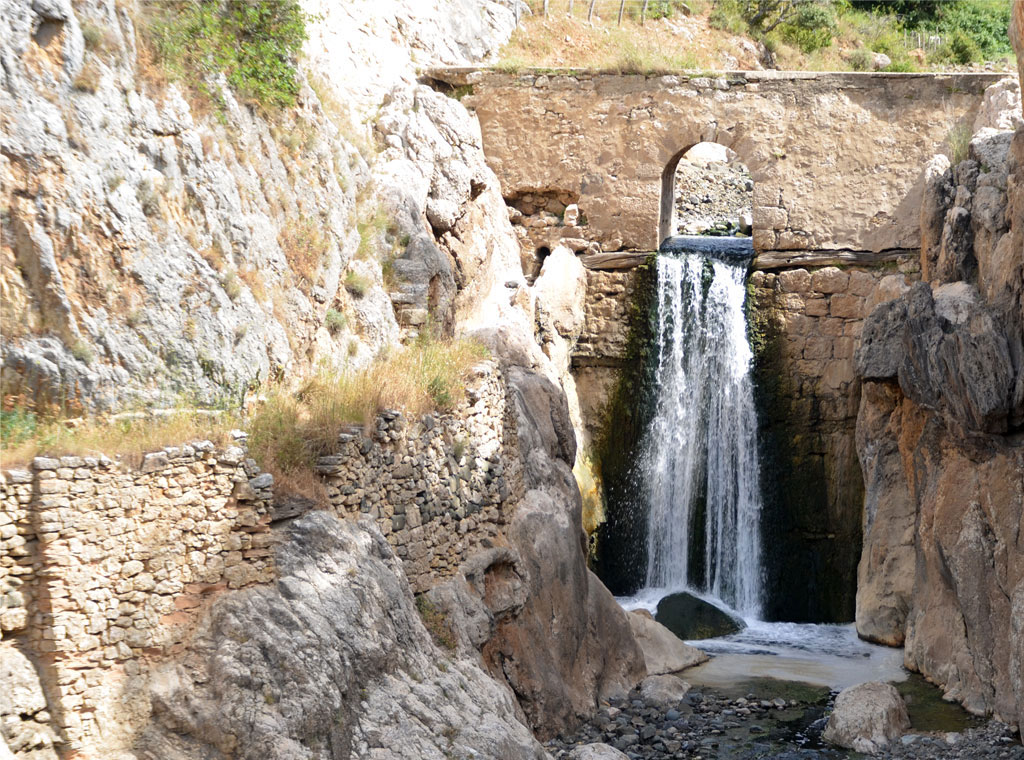
La Sal de manantial es un producto artesano obtenido directamente de la naturaleza.
La Sel del Pyrénées es un producto artesano obtenido directamente de la naturaleza y que adquiere su valor gracias a los aportes naturales que ésta le otorga.
Los manantiales salinos naturales tienen su origen hace más de 220 millones de años. En esta época conocida como el Triásico superior, más de la mitad de la península ibérica estaba cubierta por el mar Tethys. Los procesos de evaporación, sedimentación y reinundación hicieron que se formara una gruesa capa de sales en el subsuelo a unos 3000 metros de profundidad.
La carga de los sedimentos que se depositaron por encima de este conjunto y los esfuerzos tectónicos relacionados con la formación de los Pirineos, dieron lugar a la formación del diapiro.
El diapiro es la estructura natural que se forma cuando un material dúctil (de comportamiento blando) y de baja densidad sube desde su posición original profunda hasta la superficie. Este proceso ha hecho que con el tiempo la sal salga a la superficie formando lo que hoy conocemos como manantiales salinos naturales.
A partir de este agua de manantial llena de riqueza e historia se extrae sal des pirenees, gracias a la acción natural del viento, el sol y el saber hacer.
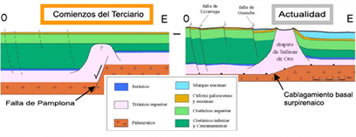
Influencia de la Falla de Pamplona en la sedimentación mesozoica y su relación con el desarrollo del diapirismo desde la Era Secundaria a la actualidad.
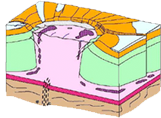
Bloque en el que se aprecia el ascenso de los materiales triásicos a través de la serie mesozoica y terciaria.